
For over 10 years, TrueMe® Counseling’s licensed therapists have helped clients break the cycle of panic disorder — using proven methods including CBT, EMDR, and interoceptive exposure — to reclaim a life no longer organized around fear. Book your free 20-minute consultation today.
Panic attacks are sudden, intense surges of fear accompanied by powerful physical sensations — a racing heart, difficulty breathing, dizziness, chest tightness — that peak rapidly and feel, in the moment, genuinely life-threatening. Many people who experience them are convinced they are having a heart attack. The terror is real, even when the danger is not.
But panic disorder is not defined by the attacks themselves. It is defined by what happens between them. The anticipatory anxiety — the constant, exhausting vigilance about when the next one will strike — becomes its own form of suffering. Life begins to be organized around avoidance: avoiding the places, situations, or physical sensations associated with previous attacks. The world gets smaller. The fear of fear becomes the primary problem.
At TrueMe®, we treat panic disorder at both levels — the attacks and the anticipatory cycle that sustains them. Our goal is not just to reduce panic attacks. It is to dismantle the entire architecture of avoidance that panic disorder builds around your life.
"What we consistently see in our clinical work is that panic disorder is not a problem of weak nerves or poor coping. It is a problem of a nervous system that has learned — through entirely understandable circumstances — to treat its own sensations as threats. The treatment is teaching it something different."
— TrueMe® Counseling
"What we consistently see in our clinical work is that panic disorder is not a problem of weak nerves or poor coping. It is a problem of a nervous system that has learned — through entirely understandable circumstances — to treat its own sensations as threats. The treatment is teaching it something different."
— TrueMe® Counseling
Over a decade of clinical work has shown us that panic disorder manifests differently depending on the individual — their history, their nervous system, and the patterns their avoidance has taken. Here are the most common presentations we treat.
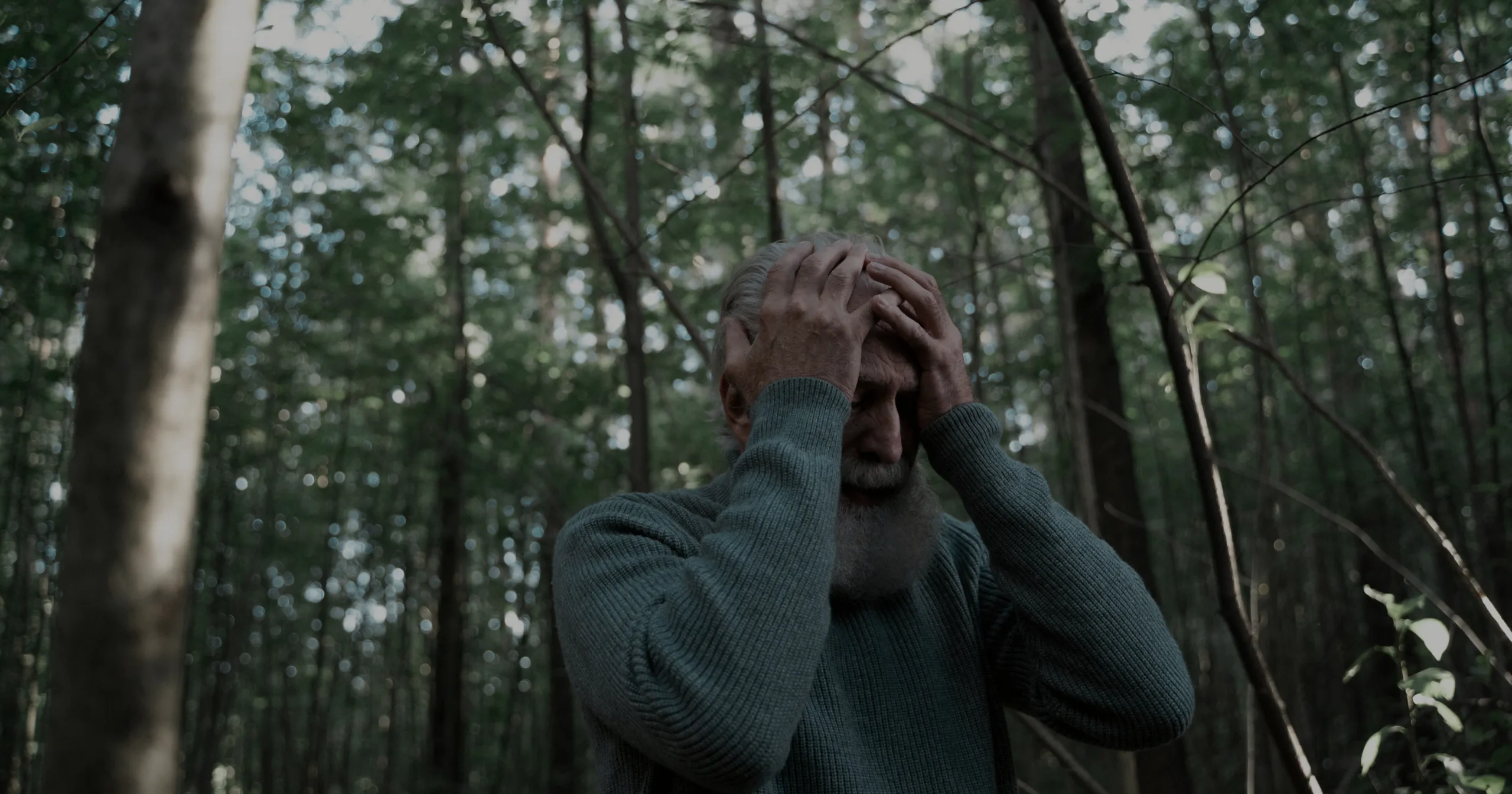
Attacks that occur without a clear trigger — seemingly out of nowhere, even during sleep — creating profound uncertainty about when or where the next one will strike.
Attacks triggered by specific situations — driving, crowded spaces, being far from home — that lead to progressive avoidance and a progressively restricted life.
When avoidance expands to include any situation where escape feels difficult or help feels unavailable — often resulting in significant restrictions on daily movement and independence.
Panic attacks that occur during sleep — jolting the person awake with intense physical symptoms and no apparent trigger — leading to sleep avoidance and chronic exhaustion.
When physical panic symptoms trigger a persistent fear of serious illness — heart disease, neurological conditions — creating a reinforcing cycle of hypervigilance and medical reassurance-seeking.
Panic attacks rooted in past traumatic experiences — where specific sensory cues trigger the nervous system into a full threat response, independent of any present danger.
Panic disorder is far more than the attacks themselves. It reshapes how you think, how your body functions, and how you move through the world. Tap a category to explore the signs.
Shortness of breath or a feeling of being smothered
Chest tightness or pain — often mistaken for a heart attack
Dizziness, lightheadedness, or feeling faint
Numbness or tingling in the hands, feet, or face
Sweating, trembling, or shaking
Nausea or stomach distress
Derealization — feeling detached from reality or yourself
An overwhelming sense of impending doom or death
Hypervigilance to physical sensations — scanning the body constantly
Difficulty relaxing or feeling safe even in familiar environments
Chronic low-level anxiety that never fully dissipates
Intrusive “what if” thinking about panic scenarios
Sleep disturbances — difficulty falling or staying asleep
Physical exhaustion from sustained nervous system arousal
Difficulty concentrating or completing everyday tasks
Most therapy fails because it’s generic. At TrueMe® Counseling, our licensed therapists use a structured, evidence-based framework built around your specific needs, history, and goals — not a one-size-fits-all program.Whether you’re across the street or across the state, we’re here — in person or virtually throughout California.
We begin with a thorough clinical assessment — identifying your specific challenges, personal history, thought patterns, and underlying triggers. This isn't a generic intake form. It's the diagnostic foundation that everything else is built on.
Using CBT and other evidence-based modalities, we help you identify and challenge the distorted thinking patterns keeping you stuck — whether that's anxiety, depression, low self-worth, or relationship difficulties. You learn to respond to life differently, from the inside out.
Insight alone doesn't create change — behavior does. We use structured techniques to help you break the cycles, habits, and avoidance patterns that have been holding you back. This is where meaningful, real-world transformation begins.
No two people are the same — and neither are their treatment plans. Your therapist builds a roadmap tailored specifically to your needs, goals, and pace. Every session is purposeful, intentional, and designed to move you forward.
Healing isn't linear — and your therapist knows that. Progress is regularly reviewed and your treatment plan is adjusted in real time to ensure you're always moving in the right direction at the right pace for you.
The final stage equips you with a personalized, lifelong toolkit — regulation strategies, early warning recognition, and sustainable coping skills — so that when life gets hard, you have everything you need to handle it. The goal is independence, not dependency on therapy.
Starting therapy can feel intimidating — especially when you’re already carrying so much. Here’s exactly what the process looks like, step by step.
Before anything else, you’ll have a brief, no-pressure call to share what you’re going through and ask any questions you have. There’s no commitment — just a conversation to make sure we’re the right fit for you.
Your first session is a relaxed, open conversation — not a test. Your therapist will take time to understand your history, your current experience, and what you’re hoping to achieve. Many clients leave their first session already feeling a sense of relief just from being heard.
Your therapist will work with you to create a plan tailored specifically to your needs — not a generic program, but a personalized roadmap designed around your unique history, goals, and what you’re going through right now.
Each session builds on the last. Using CBT and other evidence-based methods, your therapist will help you identify the thought patterns and behaviors holding you back — and equip you with practical tools you can use in real life between sessions.
Healing isn’t always linear — and your therapist knows that. Progress is regularly reviewed and your plan is adjusted as needed to ensure you’re always moving in the adirection at the right pace for you.
The goal of therapy isn’t just symptom relief — it’s lasting transformation. You’ll finish therapy with a deeper understanding of yourself, a toolkit you carry for life, and the confidence to face whatever comes next.
TrueMe® Counseling is a team of licensed MFTs and PhDs with decades of combined clinical experience.

Founder of TrueMe® Counseling | Licensed Marriage & Family Therapist

Licensed Marriage & Family Therapist

Licensed Psychologist

Licensed Marriage & Family Therapist

Associate Marriage & Family Therapist

Associate Marriage & Family Therapist

Associate Marriage & Family Therapist

Associate Marriage & Family Therapist

Associate Marriage & Family Therapist

Associate Marriage & Family Therapist
Here are some common concerns that most people ask about anxiety:
This is one of the most important clinical distinctions we make with new clients — because not everyone who experiences a panic attack has panic disorder, and understanding the difference matters enormously for how we approach treatment.
A panic attack is a discrete episode — a sudden surge of intense fear accompanied by powerful physical sensations that peak within minutes. Many people experience one or two in their lifetime, typically during periods of acute stress, and never experience another. That is not panic disorder. Panic disorder is what develops when the attacks become recurrent, unexpected, and — critically — when the person develops a persistent, consuming fear of having another one.
It is that second layer — the anticipatory anxiety, the hypervigilance, and the progressive behavioral avoidance — that defines panic disorder as a clinical condition. The world begins to be organized around preventing the next attack. Certain places are avoided. Certain activities are abandoned. Independence quietly erodes. In over a decade of clinical work, what we consistently find is that it is not the panic attacks themselves that most devastate our clients’ lives — it is the architecture of avoidance that panic disorder builds around them.
Panic disorder produces symptoms on three distinct levels — and understanding all three is essential to treating it effectively. At TrueMe®, we assess each level thoroughly before designing a treatment plan.
At the physical level, the symptoms during an attack include: racing or pounding heartbeat, shortness of breath, chest tightness or pain, dizziness or lightheadedness, tingling in the hands or face, sweating, trembling, nausea, and a profound sense of unreality or detachment — what clinicians call derealization or depersonalization. These sensations are so intense that the majority of first-time panic attack sufferers present to emergency rooms convinced they are having a cardiac event.
At the cognitive level, panic disorder is characterized by catastrophic misinterpretations of physical sensations — “my heart racing means I’m dying,” “feeling dizzy means I’ll collapse” — and persistent “what if” thinking between attacks. At the behavioral level, it produces progressive avoidance of anything associated with previous attacks, safety behaviors — carrying medication everywhere, requiring a companion in feared situations — and a gradually shrinking life. All three levels require direct clinical attention. Treating only the attacks while ignoring the cognitions and behaviors leaves the disorder largely intact.
Understanding your specific triggers is a foundational part of effective treatment. Triggers for panic attacks in people with panic disorder fall into two broad categories: external and internal.
External triggers include situations or environments associated with previous attacks — crowded spaces, driving, elevators, being far from home or medical facilities. Over time, the list of external triggers tends to expand as avoidance reinforces the belief that these situations are genuinely dangerous.
Internal triggers are, in our clinical experience, the more important and more frequently overlooked category. These include physical sensations that the nervous system has learned to associate with danger — a slightly elevated heart rate from exercise, a moment of dizziness from standing up too quickly, the warmth of a hot room, the breathlessness of mild exertion. For many of our clients, it is these internal cues — not external situations — that are the primary drivers of panic. This is precisely why interoceptive exposure — deliberately recreating these sensations in a safe, therapeutic context — is such a central component of effective panic disorder treatment.
After your first or second significant attack — not after months or years of suffering. The single most consistent thing our clients tell us is that they wish they had reached out sooner. Panic disorder is a progressive condition — the longer it goes untreated, the more entrenched the avoidance becomes, the more the world shrinks, and the harder the climb back to full functioning feels.
We recommend reaching out immediately if: you have experienced more than one unexpected panic attack and are now worried about having another. If you have begun changing your behavior — avoiding places, activities, or situations — as a result of panic. If anticipatory anxiety has become a daily presence. If panic has begun to affect your work, your relationships, or your sense of independence. Or if you are managing panic through alcohol, medication not prescribed for this purpose, or other coping behaviors that carry their own risks. You do not need to have hit a wall to deserve support. The earlier you engage with treatment, the less panic disorder takes from you.
After more than ten years of treating panic disorder at TrueMe®, we can tell you with complete clinical confidence that the evidence for Cognitive Behavioral Therapy (CBT) with interoceptive and in vivo exposure is unambiguous — it is the most effective treatment for panic disorder that exists, with response rates that consistently exceed those of medication alone or supportive therapy alone.
Here is why it works: CBT addresses the catastrophic thinking that transforms uncomfortable physical sensations into full panic cascades — the misinterpretations that tell your nervous system it is in mortal danger when it isn’t. Interoceptive exposure systematically reduces the fear of physical sensations by deliberately inducing them — elevated heart rate, dizziness, breathlessness — in a safe, controlled environment until the nervous system learns that these sensations, however unpleasant, are not dangerous. In vivo exposure rebuilds your ability to re-enter the situations that panic has taken from you — gradually, collaboratively, and at a pace you control.
For clients whose panic disorder is rooted in unresolved trauma, we integrate EMDR to process the underlying material that is keeping the nervous system in a state of chronic threat. The result, for the vast majority of our clients, is not just fewer panic attacks — it is a fundamentally different relationship with their own body and their own fear. That is the difference between managing panic disorder and genuinely recovering from it.